

For more than 15 years, I've worked at the intersection of design, storytelling, technology and leadership. Today that means building systems that help creative teams produce higher-quality work, more consistently, with less manual effort.

Visual Design
Brand identity, UI, storytelling
Systems & Automation
AI workflows, integrations, process design
Team Leadership
Developing talent, cross-functional ops
Product Thinking
User experience, business impact, craft
"Mike is one of those rare creatives who combines exceptional taste with systems thinking. He understands how excellent creative is built, how technology can scale it, and how to bring designers, engineers, execs, and marketers together around a shared vision. That's an incredibly valuable combination."
Paul Diaz
VP of Client Marketing (2021-2024)
Real Geeks
"Creative talent gets your attention. Character earns your trust. Mike has both. He brings exceptional design instincts, communicates with humility, and has a unique ability to unite creative and technical teams around a common mission. He is the kind of leader who raises the bar while bringing people with him. "
Daniel Livengood
VP of Creative Studio & AI Innovation
Rocketship Digital Marketing Agency
Product Design
Product Design
Led design direction for a full church app. Bible plans, event registration, on-demand messages, giving, CRM event integration. Partnering with an external dev team and led internal design and data staff through the entire build and app store approval process. Monthly usage grew roughly 13x after launch.
Learn More →AI Workflow Startup
AI Workflow Startup
An automated pipeline that turns a single web form into 52 personalized video scripts — combining brand voice, seasonal prompts, and AI generation into one repeatable system with zero manual writing.
Learn More →Team Development
Team Development
Eight years building and developing a creative team, including redeploying and retraining team members through fast-paced organizational growth. The people side of this role matters as much as the craft side, and I take it seriously.
Learn More →Content Strategy
Content Strategy
Took a manual, inconsistent process to a reliable automated one. Email volume grew 16x while quality held. Proof I don't just design systems, I measure and iterate on them.
Learn More →Systems Engineering
Systems Engineering
Designed and built a network-triggered cue system syncing lighting and lyrics to a live band's click track in real time — removing manual operator error from the highest-stakes moments of a live production.
Learn More →Systems & Growth
Systems & Growth
Led a full CRM migration, including a custom API integration to bridge two platforms with no native connector. Paired it with a segmented email campaign that drove 100% giving-platform adoption in three months.
Learn More →Design Leadership
Design Leadership
Lead designer across client engagements spanning healthcare, finance, and real estate — owning creative direction, UX strategy, and the systems (CRM, e-commerce, lead capture) behind the design.
Learn More →AI Design Systems: R&D
AI Design Systems: R&D
A proof-of-concept testing how far minimal input can go: one sentence and a few images, turned into a polished social carousel through an AI design pipeline. Built to explore what's possible with almost no manual design time.
Learn More →LIFEPOINT APP
13x
engagement, one redesign later.
The Situation
LifePoint's original app had the basics but nobody was using it. With roughly 250 total downloads and only ~20 monthly launches, it wasn't part of anyone's routine. The church needed something people would actually open every week, not just install once and forget.
What I Did
- Led design direction for a
full rebuild: Daily Bible reading plans, event registration with direct CRM lead capture, on-demand messages, group sign-up, and online giving, all in one app
- Partnered with an external development vendor through the entire build, scoping custom features and resolving design/technical tradeoffs together
- Owned the balance between visual polish and everyday usability, keeping every screen on-brand without sacrificing simplicity
- Managed the full App Store and Google Play submission and approval process end to end
The Outcome
Since launch, the app has grown to roughly 1,400 downloads and ~1,500 average monthly launches. People aren't just installing it, they're opening it more than once a month on average. That's about a 13x increase in usage frequency per user compared to the original app, turning a rarely touched utility into something people actually build into their week.
REAL TO REAL
AI Pipeline
that turned one form into 52 personalized video scripts.
What Made it work...
The System
A Real Estate Agent fills out a short web form with their business info, branding and voice. That input is combined into a structured profile, then run against seasonal prompt sets to generate scripts tailored to their market and tone all the way through to automatic delivery, with zero manual writing.
What Made It Work
The core challenge wasn't generating scripts, it was generating scripts that didn't sound generic. Getting there took real iteration on prompt structure: separating brand voice from regional context from seasonal angle, then recombining them in a way that held onto specificity instead of averaging it out.
The Outcome
We built and shipped a fully working pipeline. The system did exactly what we set out to prove it could do. What we didn't solve was distribution: we invested a small amount in tools and ads but couldn't generate sales, and shut the project down. It's the clearest example I have of testing a real idea end-to-end, including the discipline to call it when the market didn't respond.
LEADERSHIP & DEVELOPMENT
One team member, three roles, six months to independent ownership.
The situation
Creative teams live or die on the person leading them, not just assigning work, but building the judgment and skill to make good decisions independently. That's been part of my role for 8 years at LifePoint: developing designers, editors, and production talent at a fast-paced growth church where the team and its needs constantly evolve.
What I did
- Hired and developed Michael Maynard, originally brought on for a Music Director role
- When our Marysville location shut down, I redeployed and retrained him converting his position to Rehearsal Director, responsible for directing the band and rehearsals for our remaining campus
- Expanded his mid-week responsibilities into video filming, editing, and graphic design church-wide, and personally trained him across all three
- Within 6 months, brought him to the point of independently owning lead videographer, editor, and graphic design responsibilities
Michael's story is just one example of a pattern I try to repeat with everyone on my teams
My Leadership Values
Serve First
Lead people, not just projects
Develop People
Invest in judgment over process
Build Teams That Multiply
Grow people who grow others
Weekly E-mail System
16x
E-mail volume grew without sacrificing quality.
The Situation
Our weekly church emails had turned to noise, mostly asking people to sign up for something. Worse yet, "Weekly" in our title wasn't even reliable. Without the manpower to write meaningful content by hand, sends became inconsistent, and dropped out to a monthly frequency at it's worse. I set out to fix both problems: Consistency and quality.
The System
AI Stack
Using AI automations, weekly sermons are transcribed automatically. That transcript along with upcoming events pulled live from our website feeds into a AI email draft
Drafting
The sermon becomes a weekly content digest, with relevant upcoming events populated at the bottom, prioritized by AI on how relevant they are to the content.
Staging & Delivery
The draft lands in a Mailchimp template, where a human reviews, edits and sends. Keeping a person in the loop on tone and accuracy without doing all the heavy lifting from scratch each week.
Testing & Iteration
Once the system was reliably running, I had my team run A/B tests on subject line framing. Positive framing ("Why rest is just as important as work") against tention framing ("So Busy That You Can't Grow"). The positive framing consistently won on both open and click-through rates. A useful, slightly counter-intuitive finding.
The Outcome
The system took us from inconsistent, once-a-month sends to a reliable weekly cadence. E-mail deliveries grew from
5,641 in the first half of 2025 to
90,818
in the second half of 2025. A
16x increase in volume while open rates held steady and even improved slightly from
19% to
25%. Consistency, not just cleverness, turned out to be the biggest lever.
Live Production Automation
Two systems, one goal: remove human error from the moments that can't be redone.
The situation
Live church production has zero tolerance for mistakes. There is no "redo" on a live service. Two specific failures kept showing up: manual cue-calling mishaps during music where a missed lyric or lighting cue breaks the moment in front of the whole room, and manual link management for our online service, where a single copy-paste error could result in a live stream failing for 500+ online viewers.
What I Built
Live Show Cue Automation
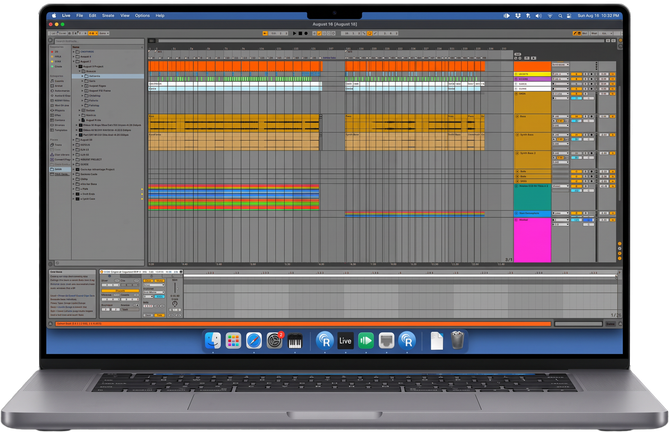
I designed and built a network-triggered cue system tied directly to the band's live click track. As the band plays through a song, cues embedded in the click track at exactly the right moment in the song automatically trigger lyric slide and lighting changes on other computers across the room. When the chorus hits the big note, the lighting shift and lyrics drop on beat, every time, without manual operators.
Automated Online Service
Before this, going live online meant someone manually hitting "start stream" then copying and pasting stream links, titles and descriptions. A tiny mistake (a wrong character or step out of order) meant the online service could not go live. I led my team to build an automated pipeline that handles scheduling and deployment without exhausting manual intervention, removing those failure points entirely.
The outcome
The cue automation has run at a 0% failure rate for 7 years. With the rare and extreme exceptions of power outages or complete network meltdowns, every lyric slide and lighting cue has been deployed on-time at every service. The online deployment pipeline cut stream outages from roughly once a month to about once a year. Two of the highest-stakes, easiest to get wrong moments in a live production turned into an infrastructure nobody has to think about anymore.
These are two examples of dozens of systems I've created myself, or led my teams to create that establish consistency and and a reduction in failure rates.
CRM Migration & Giving campaign
100% adoption in 3 months
with an estimated $50k in annual savings.
The Situation
LifePoint needed to migrate its entire church database (from CCB to Planning Center). Donor records, kids check-in information, volunteer schedules, hundreds of recurring givers all needed to switch. The giving platform (pushpay) had no native integration with the new CRM which meant hundreds of recurring donors were at risk of falling through the cracks during the switch. On top of the technical migration, we needed all our givers to actually move their giving to the new, lower-fee platform... Without losing anyone in the process.
What I Did
- Partnered closely with our database manager to design and implement the CRM migration and the custom API integration bridging PushPay and Planning Center, preserving legacy recurring gifts through the transition
- Designed multi-path volunteer workflow automation in Planning Center, auto-routing hundreds of ministry sign-ups to the right team based on how each form was filled out
- Led the donor communication strategy: planned and executed a six-part email campaign explaining the vision, the switch and the savings it would create. With suppression logic, anyone who already switched stopped receiving follow-up emails
- Coordinated direct, personal outreach to the small number of donors who hadn't switched after the full email sequence
The Outcome
The campaign drove
full
adoption of the new giving platform in
3 months, with an estimated
$50k per year in reduced platform fees. Only about 10-12 donors out of hundreds needed personal follow-up to complete the switch. The email sequence and suppression logic did the vast majority of the work on their own.
Connection model
Lead designer across a range of induestries; owning direction, not just execution
The Situation
Connection Model brings me in as a lead designer directly on client calls where the ask isn't just "make it look good", but "help us figure out what our brand and customer experience should actually be. Clients span healthcare, finance, nonprofit, real estate and technology, each with different stakes and different definitions of what "working" looks like.
What I Do
- Set visual creative direction early on, translating business goals into a concrete design strategy. Not just visuals, but how a customer moves through the entire experience
- Design and build out the pillar pages of client websites, including product catelogs, full e-commerce implimentations with payment and shipping integration
- Include CRM and lead-generation infrastructure to client CRMs like HubSpot. Forms, lead capture and automated routing that connects design decisions to what actually happens after someone converts
- Lead production team members by setting design standards and delegating implementation rather than doing every screen myself
Selected Work
Southfield Capital
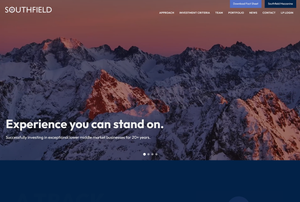
Designed 4 custom interactive widgets to a specific client spec: a team directory, a filterable porfolio-company grid, and an animated homepage widget with four roating value pillars with hover animation, and pop-up functions on all three. The fourth widget was a custom hero video slider.
Moore Properties
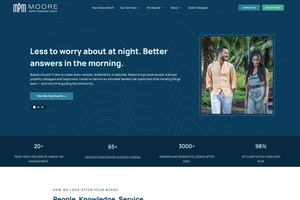
Helped Moore refine its branding, update their logo to a sleek modern design. Fresh copy paired with clean layout, proof that design and tone can make a mid-market service feel premium without overdesigning it.
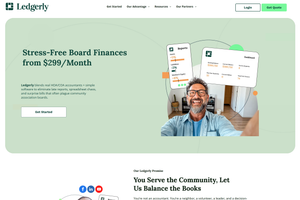
Ledgerly
Clean, trust-building site for HOA/COA accounting services. The challenge was making bookkeeping feel modern, approachable and credible rather than corporate. It worked well enough to generate 10 more client sites through referral within 6 months.
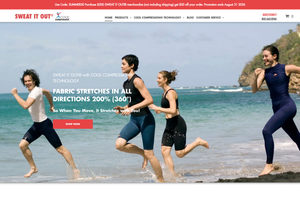
Sweat It Out
Full e-commerce rebuild for a compression apparel brand used by pro and collegiate teams since 1989. Organized nine distinct product categories (down from 20) into a checkout experience simple enough not to overwhelm a non-tehnical buyer.
AI Design Systems: R&D
Minimal input, professional output.
Testing the limits of AI-assisted design.
The situation
Real estate agents and small teams often have a good story but no time (or budget) to turn it into something polished. I wanted to test a specific qustion: how little input does it actually take, using today's AI design tools, to produce something that looks professionally made?
What I Did
Proof of concept
Took a simple brief: a logo, a listing photo, a team photo and one sentence for "what is your post about?" that was answered "We got the house even though we weren't the highest offer".
AI Prompt
Used ChatGPT to turn that minimal input into a structured prompt for a social carousel.
Generation
Fed that promt into Claude Design to generate the actual artwork for this carousel.
The outcome
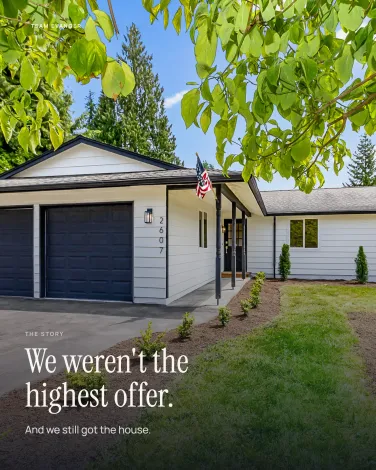
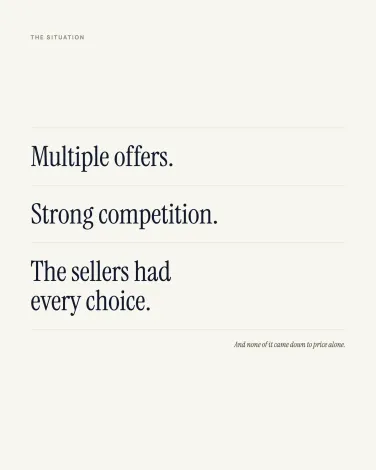
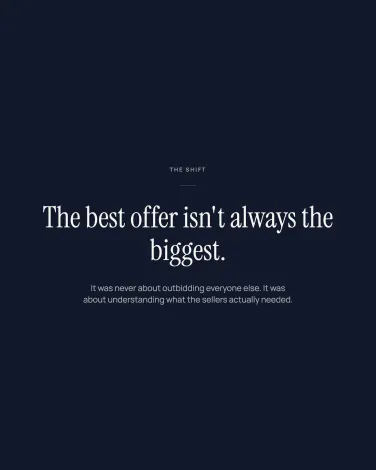
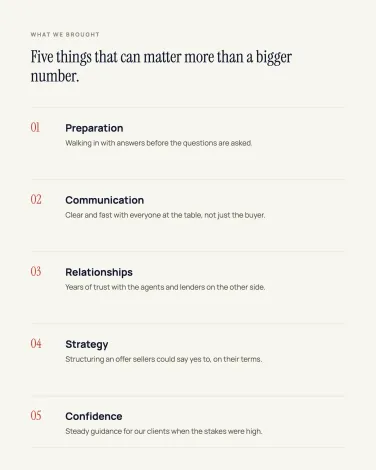
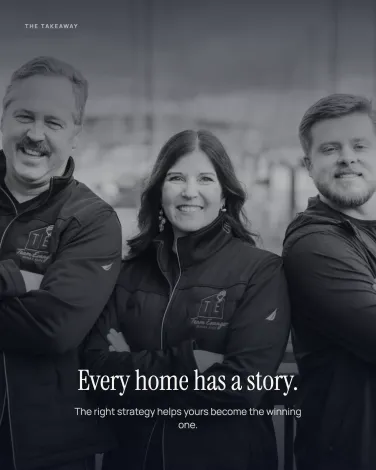
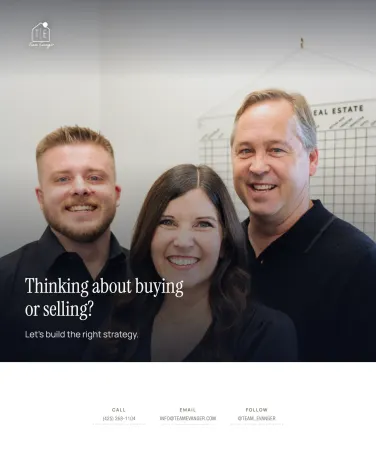
The exercice proved the premise: with a handful of inputs and the right prompt structure, AI design tools can produce a polished, on-brand social carousel with minimal manual design time. It's a small-scale example of the same thinking behind Reel To Real and the weekly email system: Using AI to close the gap between "we have an idea" and "we have something ready to publish".
Personal Project
The Rhody House
Remodel + Carpentry + Interior Design + Tool Integration
My wife and I converted a long-term rental we owned into a short-term rental, "The Rhody House" top to bottom, ourselves. I built several custom carpentry pieces for the space, my wife led interior design, and I handled the technical side: booking automation, direct payments, and the site itself.
The site runs on a Guesty-powered calendar sync across Airbnb, Vrbo, and Expedia, alongside a
direct-booking portal. One system managing every channel instead of juggling four separate calendars by hand.
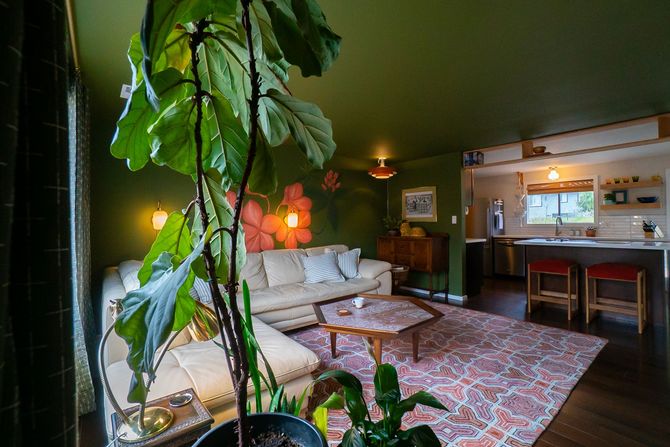



Five months in: 100% five-star reviews, Superhost status, and Airbnb Guest Favorite. Occupancy has climbed to 70–80%, monthly income is running about 4x our mortgage payment, and the remodel has already paid for itself. Next up: using Guesty's built-in tools to automate cleaning coordination, the last manual piece left in the system.